06 Nov
In the modern logistics landscape, success is no longer defined by how many vehicles you manage — but by how effectively you manage data. Every trip, route, and fuel refill generates valuable insights. Yet without proper analytics, this information often goes unused. That’s where TrackMaster360 by MRANK transforms fleet management — turning data into intelligence, and intelligence into action.
The Rise of Data-Driven Fleet Management
Fleet operations today face immense complexity: rising fuel costs, driver shortages, regulatory pressures, and ever-increasing customer expectations. Managing these challenges with spreadsheets and manual reporting is no longer sustainable. Businesses need real-time visibility, predictive insights, and automated intelligence — all made possible through advanced analytics.
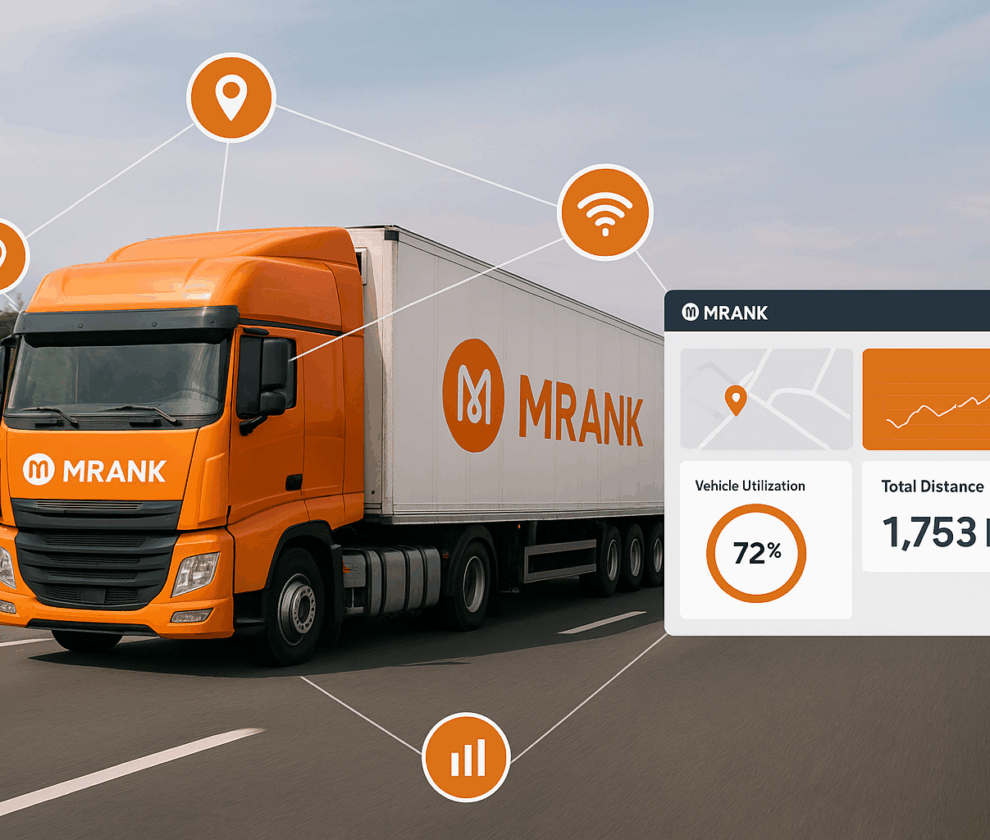
TrackMaster360, MRANK’s IoT-powered telematics platform, bridges this gap by collecting and analyzing live data from vehicles, sensors, and drivers. The result is a 360-degree view of your fleet, helping you make smarter, faster, and more confident decisions.
Turning Fleet Data into Actionable Insights
Every vehicle on the road produces hundreds of data points per minute — from GPS coordinates and engine temperature to fuel consumption and driver behavior. On their own, these numbers mean little. But with TrackMaster360’s intelligent analytics engine, this raw data is transformed into actionable insights that drive measurable improvements.
Here’s how it works:
- Real-Time Data Collection
TrackMaster360 gathers continuous streams of information through IoT sensors, onboard diagnostics, and GPS systems. This includes data on speed, fuel, routes, and maintenance parameters. - Centralized Data Integration
All the information flows into a unified dashboard, where fleet managers can monitor performance across all vehicles in real time — no matter how large or distributed the fleet. - Analytics and Pattern Recognition
The platform’s analytics tools identify patterns in consumption, downtime, and route efficiency. It highlights outliers, inefficiencies, and risks that need attention. - Predictive and Prescriptive Insights
Beyond descriptive reporting, TrackMaster360 uses predictive algorithms to anticipate potential failures, maintenance needs, or fuel wastage. Managers can take action before problems occur, not after.
Key Benefits of Analytics in Fleet Operations
- Improved Operational Efficiency
Data-backed insights allow better route planning, optimized scheduling, and reduced idle time. By analyzing traffic and delivery data, TrackMaster360 helps managers plan routes that minimize delays and save fuel. - Enhanced Safety and Compliance
Driver analytics track speeding, harsh braking, and unsafe driving behaviors. Fleet managers can identify risky drivers, provide targeted training, and ensure adherence to compliance standards — reducing accidents and penalties. - Cost Reduction and ROI Growth
Through real-time visibility, organizations can reduce fuel consumption, prevent maintenance surprises, and manage resources more effectively. Over time, these efficiencies add up to significant ROI improvements. - Predictive Maintenance
TrackMaster360’s analytics don’t just report — they predict. By analyzing vehicle health data, the system alerts you to upcoming maintenance needs, preventing costly breakdowns and extending vehicle life. - Transparent and Data-Driven Decision-Making
Instead of relying on assumptions, fleet managers can base decisions on real numbers — identifying what works, what doesn’t, and where to focus improvement efforts.
From Dashboards to Decisions
The power of analytics lies in visualization and usability. TrackMaster360’s intuitive dashboards turn complex datasets into clear, actionable visuals. Managers can:
- Compare performance across vehicles or regions.
- Filter data by date, route, or driver.
- Export comprehensive reports for audits or management reviews.
This data clarity helps management teams make confident decisions that align with business goals — whether optimizing fleet utilization, planning expansion, or improving sustainability performance.
Real-Time Analytics, Real-World Impact
Let’s consider a real-world scenario:
A logistics company running 500 trucks used TrackMaster360 to analyze idling time and fuel efficiency. Within three months, the company identified patterns of excessive idle time in certain routes and retrained drivers accordingly. The result? A 20% reduction in fuel costs and improved delivery punctuality — all powered by data-driven insights.
That’s the true impact of analytics: turning visibility into tangible value.
Building the Intelligent Fleet of Tomorrow
The future of fleet management lies in proactive intelligence. As IoT, AI, and cloud technologies evolve, platforms like TrackMaster360 will continue to redefine how fleets are monitored, managed, and optimized.
In the coming years, expect:
- AI-driven route optimization using live traffic and weather data
- Predictive analytics for maintenance and performance
- Integration with enterprise systems for unified data ecosystems
- Deeper insights into driver wellness and behavior patterns
Why Choose TrackMaster360 for Fleet Analytics
MRANK’s TrackMaster360 is built with precision, scalability, and insight at its core. With advanced telematics, customizable analytics modules, and secure cloud infrastructure, it ensures your fleet data translates directly into performance improvement.
Key strengths include:
- Centralized control and visibility
- Real-time and predictive analytics
- Secure and scalable architecture
- Tailored dashboards and reports
- Continuous innovation backed by MRANK expertise
The Future of Telematics: Trends to Watch in 2025 and Beyond
As industries continue to evolve through digital transformation, telematics has emerged as a cornerstone of smart fleet management, logistics, and connected operations. What once started as simple GPS tracking has now grown into a powerful ecosystem combining IoT, AI, data analytics, and automation.
At the forefront of this evolution stands TrackMaster360 by MRANK — a next-generation IoT telematics platform designed to give businesses complete visibility, efficiency, and intelligence across their operations. But what’s next for this dynamic industry? What will shape the future of telematics beyond 2025?
Let’s explore the trends redefining the road ahead.
- Integration of AI and Predictive Intelligence
The next leap in telematics is AI-driven automation. Advanced algorithms are already helping companies move from reactive decision-making to predictive and prescriptive actions.
With platforms like TrackMaster360, fleet managers no longer just see where vehicles are — they can predict where issues might occur. AI models analyze vast data sets to forecast fuel consumption, maintenance schedules, or even driver fatigue risks.
Predictive maintenance, in particular, is revolutionizing uptime management — allowing companies to detect early warning signs of mechanical issues, prevent costly breakdowns, and keep vehicles on the road longer.
- Cloud-Native and Edge Computing Power
As fleets become more connected, handling massive amounts of data in real time becomes critical. The future belongs to cloud-native telematics platforms that leverage edge computing to process data closer to the source — enabling faster, more reliable insights.
TrackMaster360’s architecture is built for this future. It combines the scalability of the cloud with the responsiveness of on-device analytics, ensuring that mission-critical operations — such as live tracking, alerts, and fuel monitoring — remain uninterrupted even in low-connectivity environments.
This hybrid model not only enhances speed but also improves data security and system resilience, two key priorities for enterprises managing large, dispersed fleets.
- The Rise of 5G and Ultra-Connected Fleets
The global rollout of 5G networks is set to supercharge telematics capabilities. With lightning-fast data speeds and ultra-low latency, fleets will experience near-instant data transmission between vehicles, IoT devices, and cloud systems.
This means:
- More precise real-time tracking
- Seamless video telematics and live diagnostics
- Enhanced vehicle-to-vehicle (V2V) and vehicle-to-infrastructure (V2I) communication
- Sustainability and Green Fleet Initiatives
Sustainability is no longer a corporate buzzword — it’s a business imperative. Governments and enterprises alike are pushing toward greener fleet operations, and telematics plays a key role in achieving that goal.
IoT-driven platforms like TrackMaster360 provide insights into fuel usage, idling time, and carbon emissions, empowering companies to reduce their environmental footprint. By analyzing driver behavior, optimizing routes, and monitoring vehicle efficiency, fleets can achieve significant emission reductions while saving on operational costs.
Looking forward, telematics will also help manage electric vehicle (EV) fleets — tracking battery health, charging patterns, and energy consumption to ensure sustainable and cost-effective operations.
- Cybersecurity and Data Privacy
With great data comes great responsibility. As telematics systems collect sensitive information about vehicles, routes, and drivers, cybersecurity becomes a top priority.
Future-ready platforms like TrackMaster360 are designed with end-to-end encryption, access controls, and compliance frameworks to safeguard data integrity. MRANK’s focus on secure cloud infrastructure ensures that customers benefit from innovation without compromising trust.
As regulations around data privacy tighten worldwide, businesses that invest in secure, compliant telematics solutions will gain a strong competitive edge.
- Unified Platforms and Ecosystem Integration
The future of telematics lies in integration, not isolation. Businesses no longer want standalone systems; they need unified platforms that connect seamlessly with ERP, CRM, and supply chain applications.
TrackMaster360’s flexible architecture supports API-based integration, allowing enterprises to synchronize data across departments — from operations to finance. This holistic approach enables end-to-end visibility and decision-making at scale.
In 2025 and beyond, we’ll see greater adoption of ecosystem-based telematics, where transportation, logistics, warehousing, and customer service systems operate on a single, connected backbone.
- The Human Element: Smarter, Safer, Empowered Drivers
Amid all the technology, the human factor remains central. Future telematics will not only track vehicles but also support and empower drivers.
From AI-powered fatigue detection to real-time performance feedback, telematics tools like TrackMaster360 are helping create safer driving environments. Data-driven coaching and gamification encourage drivers to adopt fuel-efficient, safe practices — fostering a culture of accountability and motivation.
A smarter driver leads to a smarter fleet — and that’s the ultimate goal.
The Road Ahead with MRANK and TrackMaster360
The telematics industry is moving toward total digital intelligence, where data, devices, and decisions merge into one connected ecosystem. At MRANK, our mission is to stay ahead of this curve — designing solutions like TrackMaster360 that are future-ready, adaptable, and built for growth.
With a focus on IoT innovation, scalable cloud infrastructure, and advanced analytics, MRANK helps businesses transform fleet management into a strategic advantage — today and for years to come.
Learn more about TrackMaster360 GPS fleet tracking and fuel monitoring, or book a free demo.