
Category: Blogs

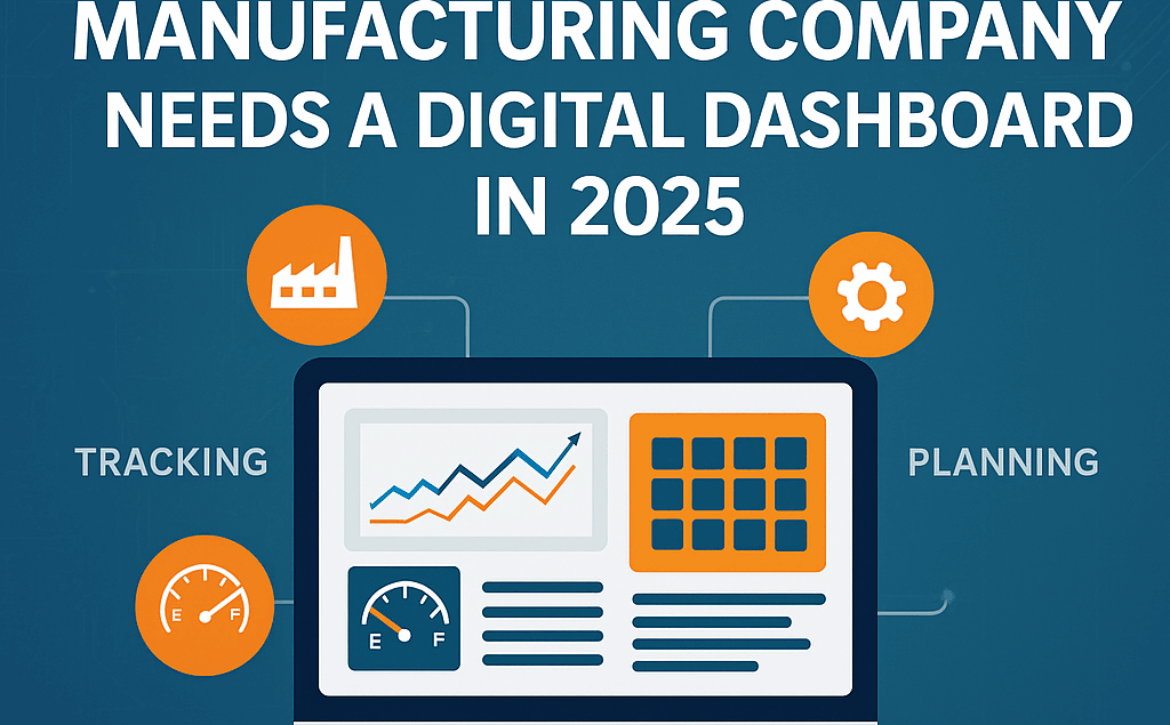
Why Every Manufacturing Company Needs a Digital Dashboard in 2025

Empowering Smarter Operations Through Real-Time Data and IoT
The manufacturing landscape is evolving faster than ever. From supply chain disruptions to rising production costs and labor challenges, success in 2025 demands more than traditional management — it requires real-time visibility and data-driven decisions.
That’s where a digital dashboard becomes your most valuable asset.


📊 What Is a Digital Dashboard for Manufacturing?

A digital dashboard is a centralized platform that gathers live data from your machines, sensors, production lines, and business systems — displaying it all in one interactive interface.

Instead of switching between multiple reports and spreadsheets, managers can monitor production efficiency, downtime, fuel usage, and delivery schedules in real-time.

Solutions like M RANK’s smart IoT dashboards bring clarity to complexity — transforming raw industrial data into clear, actionable insights.


⚙️ Key Benefits of a Digital Dashboard

🔸 1. Real-Time Operational Visibility

View machine performance, energy consumption, and process flow as they happen.
Instant alerts highlight issues before they affect production, allowing teams to react faster and reduce downtime.

🔸 2. Data-Driven Decision Making

With integrated analytics, dashboards convert massive data sets into meaningful KPIs — helping leadership teams make evidence-based decisions instead of relying on guesswork.

🔸 3. Predictive Maintenance

IoT sensors and analytics can detect unusual patterns in temperature, vibration, or fuel usage — enabling predictive maintenance that prevents costly breakdowns.

🔸 4. Improved Resource Optimization

Digital dashboards reveal hidden inefficiencies in manpower, machinery, and fuel consumption.
Manufacturers can use this data to optimize resource allocation and cut unnecessary costs.

🔸 5. Cross-Department Collaboration

Dashboards unify data from production, logistics, inventory, and finance into a single view.
This breaks data silos and ensures that everyone — from floor supervisors to CEOs — works with the same accurate information.


🏭 The 2025 Manufacturing Challenge

By 2025, manufacturers are expected to handle:

  • 50% more data from connected machines

  • Stricter ESG & efficiency reporting requirements

  • Higher demand for automation and IoT adoption

Without a digital dashboard, keeping pace with real-time operational demands will be nearly impossible.


🌐 How M RANK Helps Industries Go Digital

At M RANK, we empower manufacturing and industrial clients through custom-built IoT dashboards and analytics platforms.
Our solutions integrate data from multiple systems — including ERP, IoT devices, and GPS sensors — into a unified control panel.

Whether it’s fuel tracking, fleet visibility, or plant performance monitoring, M RANK’s technology ensures clarity, control, and confidence in every operation.


🚀 The Future Is Data-Driven

The shift from manual reporting to real-time digital dashboards isn’t just a technology upgrade — it’s a competitive advantage.
Manufacturers who embrace digital transformation in 2025 will gain efficiency, agility, and profitability like never before.


💡 Ready to Build Your Smart Dashboard?

Start your digital transformation journey with M RANK today.
👉 Visit www.mrank.in to explore our IoT and analytics solutions or request a free consultation
Read More

Building Cross-Platform Apps with React Native: M RANK’s Approach

Introduction

In today’s fast-paced digital landscape, mobile applications are the cornerstone of customer engagement and digital growth. At M RANK, we specialize in developing high-performance cross-platform mobile apps using React Native — a powerful framework that enables faster development, native-like performance, and seamless scalability for modern businesses.


🧩 What is React Native?

React Native, developed by Meta (Facebook), is an open-source JavaScript framework that allows developers to build mobile applications for both iOS and Android using a single codebase. It leverages React.js for component-based architecture while rendering truly native UI components for unmatched performance and fluidity.


⚙️ Why M RANK Chooses React Native

At M RANK, our mission is to deliver robust, efficient, and scalable mobile applications. React Native empowers us to achieve this through:

  1. Single Codebase Efficiency
    Build once, deploy everywhere — React Native enables faster development and reduced maintenance costs.
  2. Native Performance
    Unlike hybrid apps, React Native bridges JavaScript with native APIs, offering near-native user experiences.
  3. Hot Reloading for Speed
    Developers can instantly see changes, dramatically reducing debug and build times.
  4. Third-Party Plugin Support
    With access to a vast ecosystem of plugins and libraries, M RANK can integrate maps, sensors, analytics, and payments seamlessly.
  5. Strong Community & Ecosystem
    Backed by global developer support, React Native ensures long-term reliability and innovation.


📱 M RANK’s React Native Development Workflow

Our structured development process ensures quality, performance, and reliability in every release.

  1. Requirement Analysis & UI/UX Design

We start by understanding client goals and designing intuitive, user-centric interfaces using tools like Figma and Adobe XD.

  1. Modular Component Development

M RANK engineers leverage React Hooks, Context API, and TypeScript to build maintainable, modular codebases.

  1. Backend Integration

We connect apps to Node.js, Django, or Firebase backends using REST or GraphQL APIs for smooth data flow and synchronization.

  1. Testing & Optimization

Each build undergoes unit testing (Jest) and UI testing (Detox/Appium) to ensure bug-free deployment and high performance.

  1. Deployment & Continuous Delivery

We automate releases through CI/CD pipelines using GitHub Actions or Bitrise, ensuring rapid updates and stable rollouts to Google Play Store and Apple App Store.


🌐 React Native in Real-World M RANK Projects

Example Use Case:
In one of M RANK’s recent projects for a logistics and fleet tracking client, we implemented a React Native-based dashboard integrated with IoT devices.

  • Live location tracking via MQTT protocols.
  • Push notifications for driver alerts.
  • Offline data caching for field operations.

This solution reduced app development time by 40% and improved performance by 30% compared to traditional hybrid stacks.


🧠 Tech Stack at M RANK

Layer

Technologies Used

Frontend

React Native, Redux Toolkit, TypeScript, Expo

Backend

Node.js, Express, Firebase, GraphQL

DevOps

GitHub Actions, Fastlane, Bitrise

Design

Figma, React Native Paper, Lottie

Testing

Jest, Detox, Appium


🔒 Security & Performance Focus

At M RANK, we integrate secure storage, JWT authentication, and end-to-end encryption for data-sensitive applications. Our optimization strategies include lazy loading, code splitting, and memory management to ensure smooth, responsive app performance.


🧭 Future of React Native with M RANK

As React Native evolves with Fabric architecture and TurboModules, M RANK continues to innovate with AI-driven UI automation, IoT connectivity, and integrated analytics dashboards — keeping our clients ahead in the digital race.


💡 Conclusion

React Native is more than just a framework — it’s a gateway to faster innovation and cross-platform success. With M RANK’s expertise, businesses can transform ideas into high-performing mobile experiences that delight users and scale effortlessly.


Read More